How to use AI tools to plan travel this summer, according to experts


AI may not replace the personal touch or trust of asking a well-traveled friend for their must-visit recommendations in a destination, but new tools can help streamline some tasks and take some of the guesswork out of parts of the travel-planning process, experts say.
Whether utilizing AI to track flight and hotel prices, create custom itineraries based on specific personal preferences, or better understand intricacies of a trip insurance policy, travel expert Katy Nastro says there are some key ways to successfully implement and use AI to your advantage -- though she and other experts caution that travelers should always double check AI tips or recommendations to ensure they make sense in the real world.
Plus, with more companies launching AI dashboards that comb through historical pricing data, there are even more tools to help find new ways to save this summer.
Don't get locked into restrictive prices or non-refundable rates
"Google Travel is getting even more handy with their hotel price tracker," Nastro, of the airfare monitoring site Going, told ABC News.
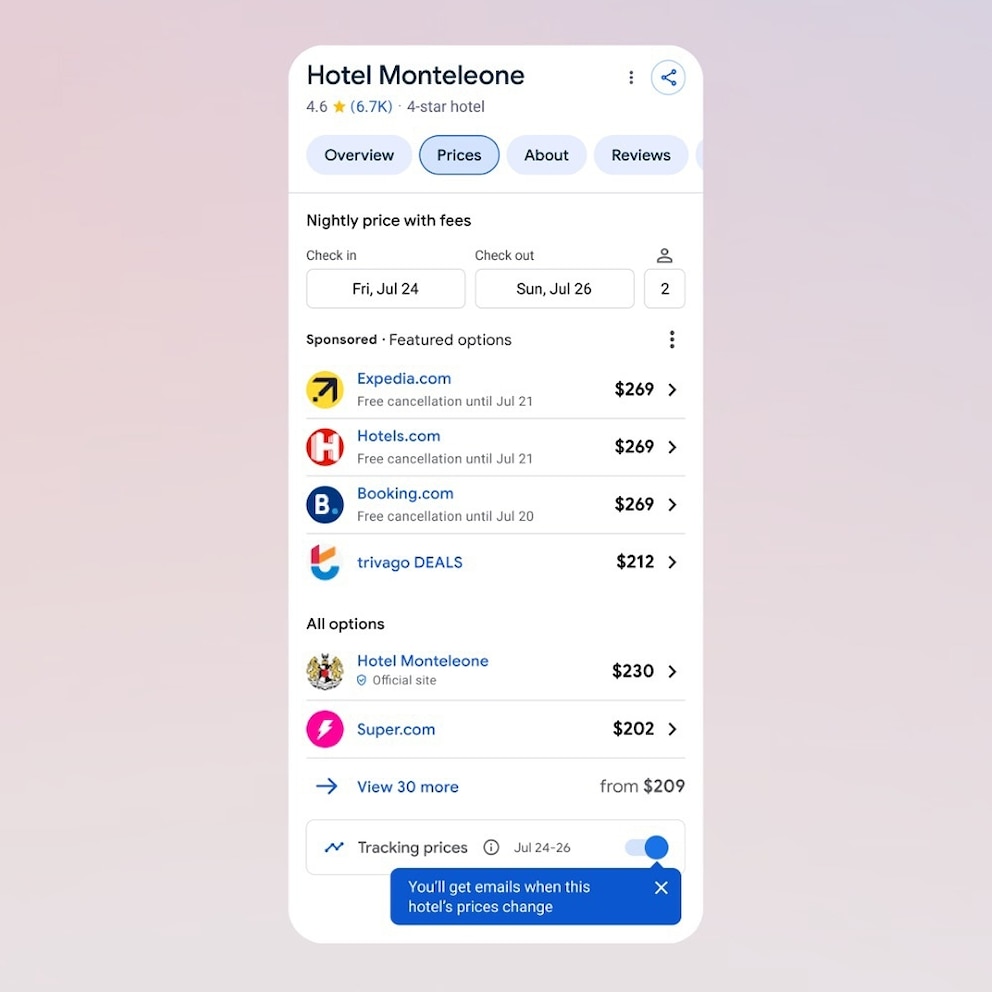
The updated feature now allows users to set and receive alerts about prices on individual hotels. Simply search a desired hotel name, tap the price tracking toggle and get an email once the rate changes for the specific date selection.
"The key this year is being able to give yourself the option to save down the road if fares or rates drop," Nastro said.
Google Flight Deals rolled out last year, which Nastro said "takes the 'explore' feature and turns it into an AI travel agent [that] searches for deals."



She hailed its ease of use, but suggested people "take the output with a grain of salt."
"You need to be extremely specific about what you are looking for, or else it will give you flights you wouldn't take otherwise," Nastro said. "It doesn't take into account current travel warnings, local insights.... For example, it provided deals this summer to a warm place, but the suggested warm places aren't necessarily the best to travel to in the summer, let alone right now in the current climate."
She suggested people cross-reference other sources such as Going "for historical deal averages so you can book the deal in confidence rather than question."
How to build trip itineraries with AI tools
Other Google functions like AI Mode in search offer a way to get granular with specific needs and preferences and allow for customization and multiple iterations of planning an itinerary, from brainstorming to booking.
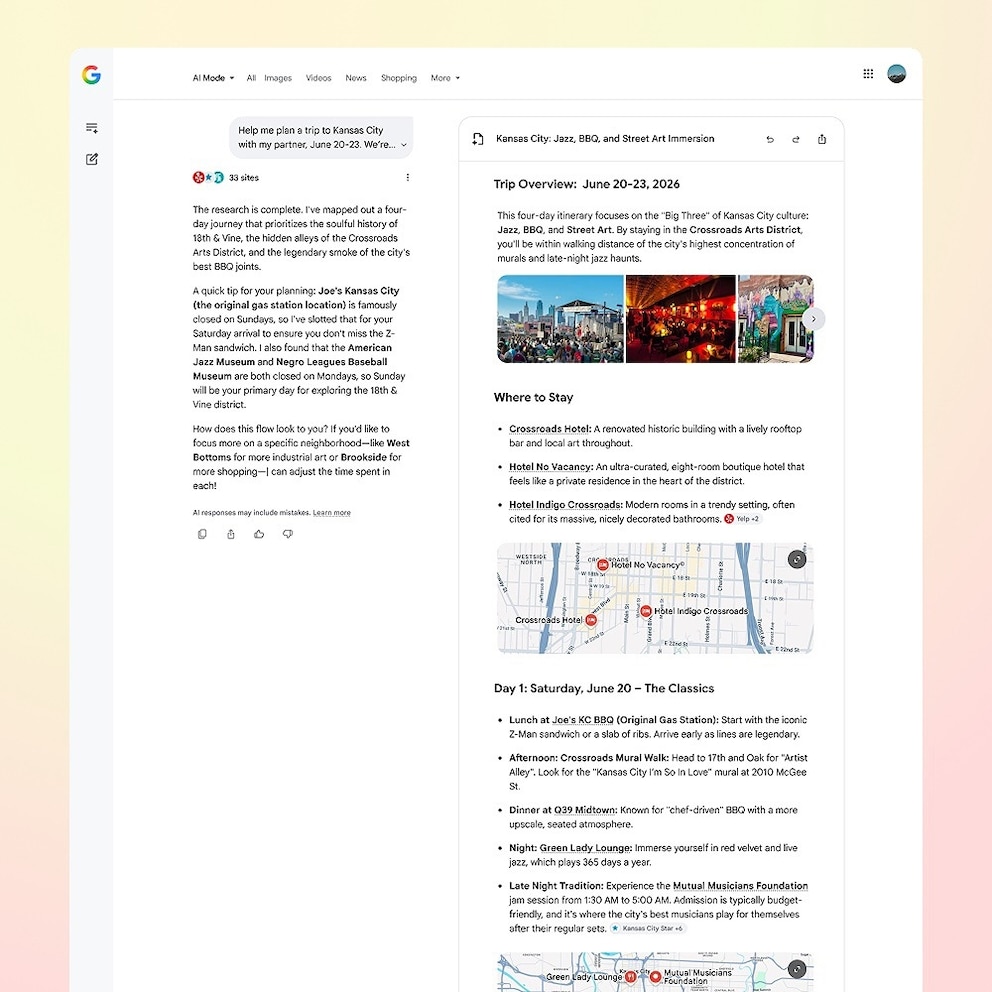
Users can create the ideal trip in a Canvas side panel, then describe the parameters of a desired trip, ask for flight options, hotel recommendations, local attractions laid out on a map and more.
Nastro reiterated that while planners like Google or EasyTripAi are getting better with actionable insights -- crowd levels, historical weather trends and more -- the "best bet is to cross-reference when using AI tools."
"We still find AI adoption in travel to be lower than friends and family recommendations, according to our State of Travel report, but it is definitely growing, and we have no doubt these tools will get better in time," she said.
On Thursday, Kayak rolled out a new Ask AI conversational planning experience that allows users to search, compare and book trips while asking personalized questions to get tailored results all in one place.
Even cruise bookings are getting simplified. Virgin Voyages, for example, has introduced a new AI-powered crew assistant, Rovey, a platform built with Google Cloud AI that is meant to "reduce friction in cruise booking" from first search to voyage-planning with feedback and details on itineraries, cabin categories, pre-sail logistics, dining options and shore excursions.
With Rovey, travelers can narrow down preferences based on time of year, destination, travel styles, pace and interests to get a curated plan before the ship sets sail.
Invest in travel insurance and check the coverage details with AI
Amid increasing jet fuel price volatility, which many airlines and experts have said will impact airfare and other fees, Nastro pointed out that now is the time to consider investing in travel insurance, especially for trips overseas.
"This can give you some peace of mind, but who has time to read through the weighty policies before hitting purchase? This is where AI can be a lifesaver," she said. "Drop your policy contract into an AI model and ask it to identify key clauses and coverages, with every exception in plain English."
In doing so, the models can "help decode legalese in half the time, so you know what exactly will be covered without surprises," she said.
AI tools to help with packing, avoid checked bags

For anyone trying to avoid checked bag fees, Nastro said, "I would even play around with AI to help packing this year."
Fits and Acloset are two tools that she said could help people avoid the dread of overpacking by consulting your closet and itinerary to pack accordingly.
Stay flexible with travel dates and destinations
Expedia Group travel expert Melanie Fish told ABC News that flexibility remains key to saving this summer.
"Timing can make all the difference when it comes to finding more affordable fares, so play around with dates to see what makes the most sense cost-wise," she said.
Much like Google or other flight trackers, the Expedia app can notify customers when the price of an airfare drops, Fish said.
"Another great tip is looking closer to home and beyond the obvious destinations to unlock great savings," she continued. "Swapping a high-profile city like Miami for a nearby alternative like Fort Lauderdale can unlock lower rates and fewer crowds."
Another good way to save is a package deal.
"Bundling flights and hotels can help travelers save hundreds of dollars on average compared with booking separately, making it easier for families to plan complete summer vacations without compromising the experience," Fish said.