Will the rise in oil prices drive up inflation? Experts weigh in

President Donald Trump set off fears of a budget-busting price spike after a major policy announcement that was wider in scope than many analysts expected.
It happened last spring, when Trump rolled out "Liberation Day" tariffs. Economic doomsday predictions never came to pass, however, in part because the president ultimately dialed back many of the levies.
Dire forecasts returned in recent days after the U.S. and Israel initiated a war with Iran that drove up oil prices and left consumers on the verge of another possible bout of across-the-board inflation, analysts from Michigan State University and research firm Inflation Insights told ABC News.
The jump in oil prices is ratcheting up costs for gasoline and airfare, and it threatens to push up prices for a vast array of goods reliant on diesel-fuel transport, including groceries, the analysts said. Higher inflation could in turn deter the Federal Reserve from lowering interest rates, maintaining elevated borrowing costs for everything from mortgages to credit cards.
Such a scenario could hammer consumers if oil prices remain elevated or move higher amid the ongoing war, analysts said, but a speedy resolution of the conflict could render the episode little more than a temporary blip.
"This crisis that is hitting energy -- it hits everything," Jason Miller, a professor of supply chain management at Michigan State University. But, he cautioned, the ultimate impact is "very, very, very uncertain."
The Iran war has roiled oil markets as traders fear a prolonged blockade of the Strait of Hormuz, a trading route that facilitates the transport of about one-fifth of the global oil supply.
U.S. crude oil prices hovered at about $86 per barrel on Tuesday, which marked a roughly 17% drop from a day earlier and well below a recent high of nearly $120.
Since a month ago, however, oil prices have soared more than 30%.
Some analysts warned prices still stand at risk of rising to $150 a barrel or higher. Saudi Aramco, the world's largest oil exporter, warned on Tuesday of "catastrophic consequences" for oil markets, unless tanker traffic resumes in the Strait of Hormuz.
"The possibility of $150 or $200 a barrel is not folks disliking the president and saying these numbers for political reasons," Miller said. "This is just economic reality."
In recent days, Trump has voiced mixed messages about how the White House may address oil prices and related cost woes.
A retreat in oil prices on Tuesday came after the president indicated a day earlier the war may soon be over. Trump also threatened an escalation of the conflict on Monday, however, saying on social media that Iran would "be hit by the United States of America TWENTY TIMES HARDER" if it sought to impede tanker traffic in the Strait of Hormuz.
The U.S. military has begun examining ways to escort commercial ships through the strait, in case Trump requests it take such a step, Gen. Dan Caine, chairman of the Joint Chiefs of Staff, said at a press conference on Tuesday.
Consumers have already faced some price increases. The average price of a gallon of gasoline in the U.S. jumped to $3.53 on Tuesday from $3.10 a week earlier, AAA said.
If sustained, some analysts said, the current level of gas prices would pinch many shoppers -- and a further rise could significantly erode spending.
"It will really start to eat into disposable income for consumers if it persists for several months," Inflation Insights founder Omair Sharif told ABC News.
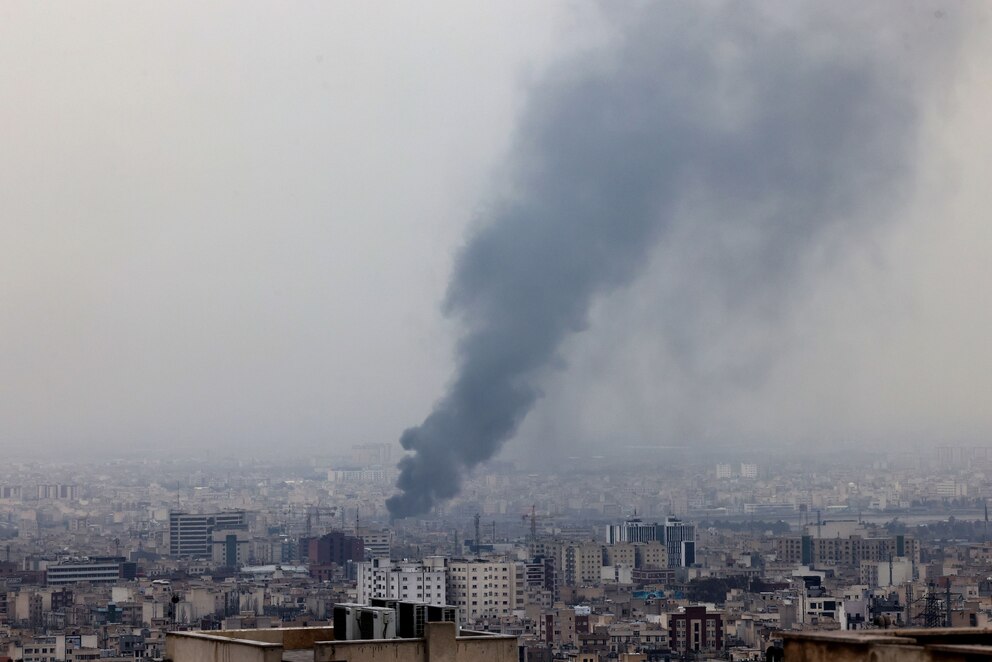
The rise in prices could extend well beyond gasoline, some analysts said. The reason for that is a surge in the cost of diesel fuel, which could push up the price of just about everything transported across the global supply chain.
The average price of a gallon diesel stands jumped to $4.78 on Tuesday from $3.65 a month earlier, amounting to about a 30% increase, AAA data showed.
"Energy price shocks transmit into production costs across virtually every sector of the global economy," Thierry Wizman and Gareth Berry, global strategists with financial services group Macquarie, said in a note to investors. "In other words, no amount of supply chain diversification could fully insulate manufacturers from a sustained surge in the price of oil or natural gas."
Every dollar spent on food typically includes three or four cents that stem from transportation costs, Sharif said, but a small cost increase across all groceries could be felt by consumers.
"It's typically not a huge number," Sharif added. "But we're seeing massive spikes in diesel prices."
To be sure, the inflation risk could be largely averted by a speedy resolution to the war or a different measure that reopens the Strait of Hormuz, which would eventually bring oil and gasoline prices down to pre-war levels, some analysts said. A brief jump in those prices, they added, would have little lasting effect on overall price levels.
The risk of higher inflation remains "modest," investment firm Vanguard said in a note to investors on Monday, forecasting that a larger rise would require a "more persistent shock."
Still, inflation stands at elevated levels, though it has softened. In January, inflation fell to 2.4%, its lowest level in eight months. The U.S. Bureau of Labor Statistics did not release inflation data in October 2025 due to a government shutdown. Inflation remains slightly higher than the Federal Reserve's target rate of 2%.
While the war with Iran has stoked concern among some analysts, they acknowledged that the conflict has also widened the range of possible outcomes.
"Forecasts are being updated day to day," Sharif said. "I don't think anybody will want to get pinned down on them."