Closing arguments in Tupac murder trial expected to begin Monday: What to know
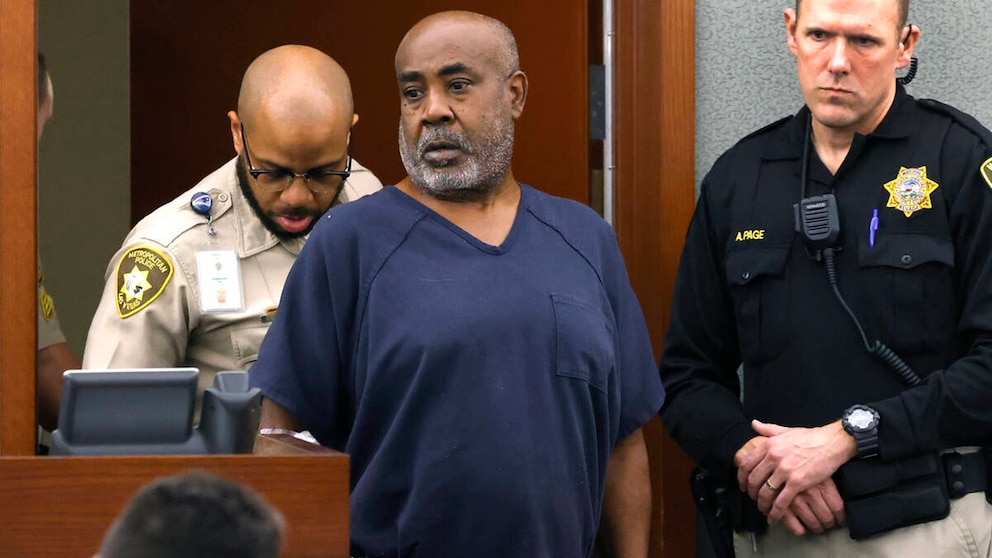
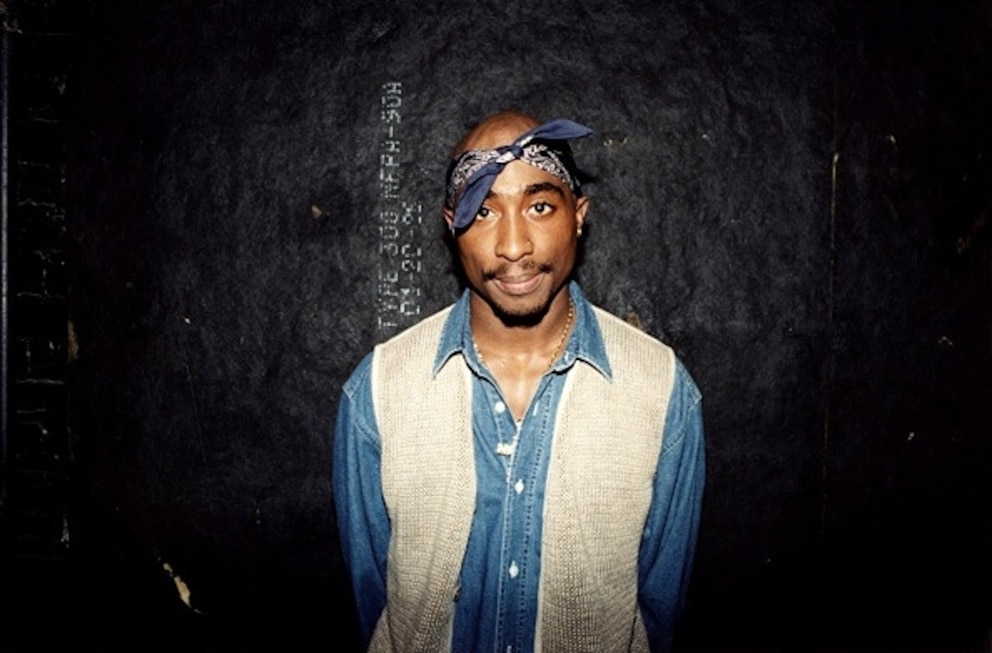
Three decades, two dozen witnesses and weeks of sensational and fiery testimony later, closing arguments are set to begin Monday in the trial for the only person ever charged with the murder of rap icon Tupac Shakur.
It's a seminal moment in modern American culture and law enforcement, all taking place in a small Las Vegas courtroom only miles away from where Shakur was gunned down in a drive-by shooting on Sept. 7, 1996.
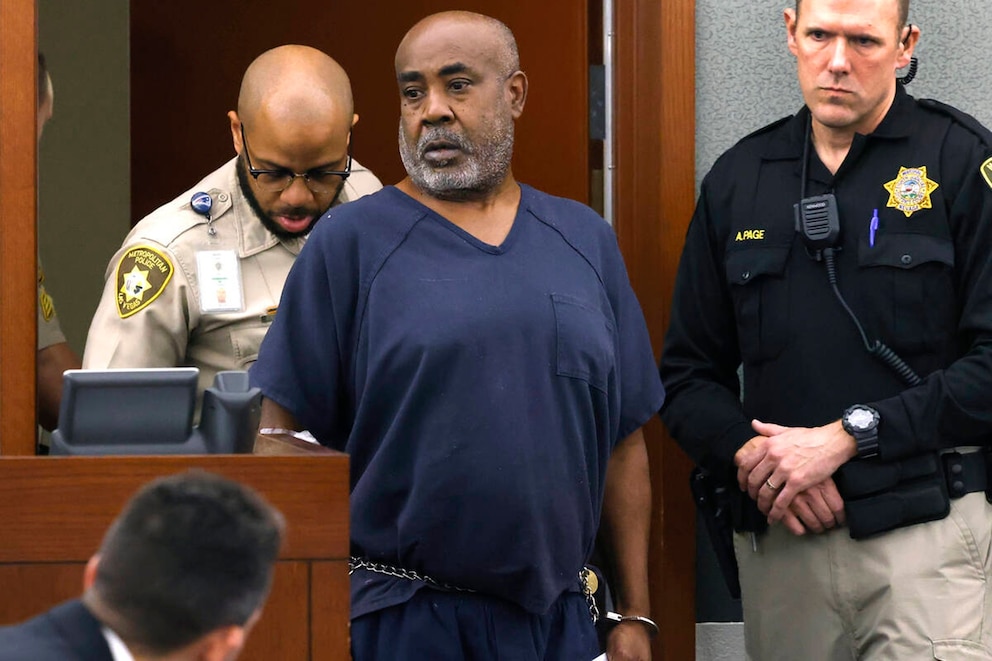
As Clark County District Court Judge Carli Kierny prepares to hand the case to the jury, prosecutors say that Duane "Keffe D" Davis -- the man charged -- has confessed repeatedly to orchestrating Shakur's killing. In great detail. His lawyers insist those confessions were all lies.
The question for jurors will be whether they believe him or not.
"Remarkably, you will learn that from Duane Davis himself," Clark County Chief Deputy District Attorney Binu Palal told the jury in his opening statement. "On September 7, 1996, Tupac Shakur, publicly on camera, participated in a humiliating beating of Duane Davis's nephew," Palal said. "Duane Davis knew that, in his world, that required a response, and over the years, in private interviews, in public statements, and even in private calls, Duane Davis has repeatedly told us over and over again about the anger he felt -- and his own role in the revenge drive-by shooting of Tupac, and now nearly 30 years later, we're going to ask you to finally hold Duane Davis accountable."
Davis' defense had one word to describe his client's confessions: "B-------," his lawyer Michael Sanft told the jury of those prior statements. Sanft laid out what he described as an at times "biased" and "sloppy" investigative effort from police, who after three decades of failing to bring any charges in Shakur's murder, he says were targeting a man they knew was prone to embellishment.
Davis is charged with murder with the use of a deadly weapon with the intent to promote, further or assist a criminal gang. He now disavows his prior confessions and has pleaded not guilty. If convicted, the 63-year-old faces a possible maximum sentence of life in prison.
Prosecutors say Davis did not fire the gun that killed Shakur -- they allege that was the work of either Orlando "Baby Lane" Anderson, Davis' nephew or another man in the backseat of the car. Police and prosecutors have accused Davis, an admitted longtime leader of a Los Angeles street gang, of being the "shot caller" and handing the gunman the murder weapon.
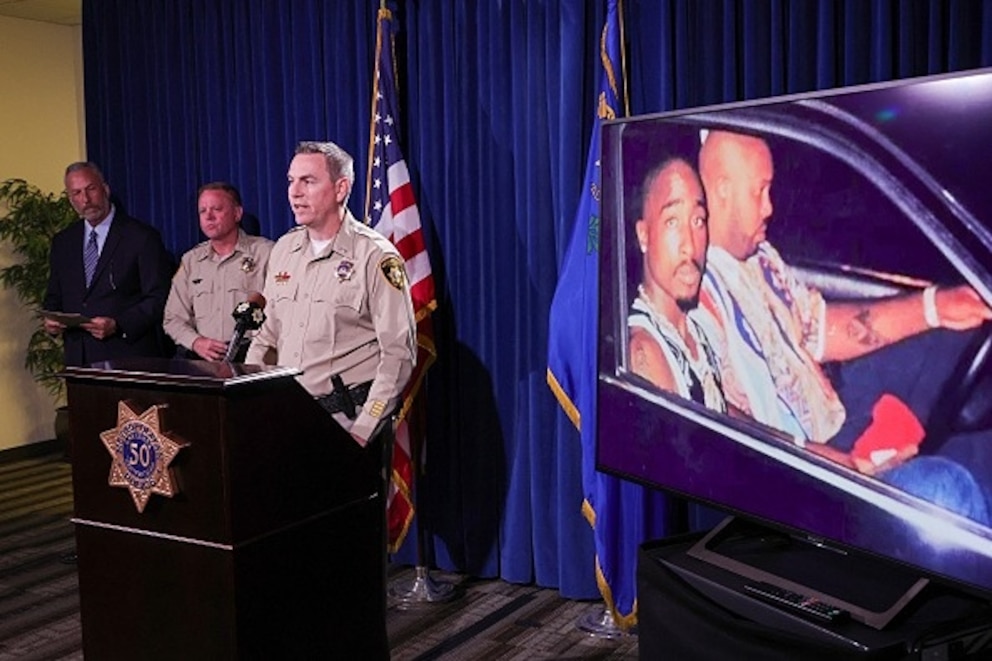
Davis is accused of getting hold of a ".40 Glock" and ordering the crew riding with him in a white Cadillac to open fire on Shakur and the man sitting next to him as they rode in a BMW near the Vegas Strip, rap impresario Marion "Suge" Knight.
Through the course of the two-week trial, police and former gang members testified that the shooting came amid a growing war between the Crips and Bloods gangs in South Los Angeles. The Shakur hit, they said, only escalated the tit-for-tat of gang violence.
To make their case, prosecutors used Davis' own words to tell the story.
In court, jurors heard Davis' consistent repeated accounts of what he claimed happened: he and his crew went to look for Shakur and Knight and that he gave the gun "to the Cadillac," where he, Anderson and two others would, thanks to screaming fans, find their attention drawn to the BMW carrying Shakur and Knight near the Vegas Strip.
"We at the light on Las Vegas and Flamingo, and he, Suge, ah, Tupac hanging out the window, and all the girls was going crazy on the corner. S---, that m-----------'s right there," Davis said, adding their Cadillac "hooked a U-turn" on Koval and Flamingo Road and pulled up alongside Shakur and Knight's car.
"What happened when you pulled up alongside?" Vegas investigators asked. "Got to shooting," Davis said. He added it was "Orlando," who he recalled said, "Give it here, I'll shoot... and he got to shooting" several rounds into the car. "I seen a bullet like going in Suge's head. I see the boy jump up and down, trying to get in the back seat," Davis said, meaning "Tupac." Davis added he "thought [Knight] was dead" and saw Shakur "trying to duck, trying to hide." He said he and his crew dumped the Cadillac and left the gun "on the tire" of the car. Davis said they hadn't been really hunting for Shakur and Knight -- they had come to Vegas to party -- but that the opportunity for revenge presented itself. "We just got lucky," Davis said. "We happened to bump into 'em."
Prosecutors called officers and detectives on the case who testified to what investigators have been saying for years: Knight was connected with the Mob Piru Bloods from Compton and so, by extension, was his Death Row Records and his headline artist, Shakur.
On the other side was the Bad Boy Records label and its chief, Knight's nemesis Sean "Diddy" Combs. With the Bloods connected to Death Row, Bad Boy frequently turned to the Crips for security. Davis was a leader of the South Side Crips, also based in the L.A. community of Compton.
Davis and Knight have known each other since childhood, they both have told ABC News.
In an effort to blunt the impact of Davis' previous statements admitting to his role in Shakur's murder, his lawyer, Michael Sanft, made the case that Davis' words aren't worth the paper they were written on -- even in the pages of his own memoir. Sanft said Davis lied to make money -- and there is no concrete proof Davis was in the car with Shakur's killer or even in Sin City that night.
"Ask yourself this: what facts do they have after 30 years?" Sanft asked jurors in court. "There are no facts to point to Keffe. Not one."
By contrast, prosecutors painted for the jury an intricate portrait of endless spiraling violence in L.A. that reached a crescendo in Vegas when members of the Bloods and Crips, along with celebrities and businesspeople, descended on Sin City to watch Mike Tyson fight Bruce Seldon at the MGM Grand.
Davis had also told investigators, in his 2008 and 2009 police interviews and his book, that amid mushrooming violence between the two groups, Combs had offered Davis a bounty on rivals Knight and Shakur -- and that while that wasn't why they went looking for the pair that night, it was an added incentive.
"He's like, man, I gotta get rid of them dudes, man," Davis quoted Combs. "We'll wipe their ass out quick, you know?" Davis said in his 2008 police interview.
Combs has repeatedly denied any involvement in Shakur's killing and has never been named by investigators as a suspect or even a person of interest in the case.
When the crowds arrived at the MGM, tensions between the Crips and the Bloods were already boiling over after a scuffle between Bloods and Crips had broken out a few weeks earlier at an L.A.-area mall, over a coveted Death Row medallion. Anderson, a Crip, was involved, according to police. It was an act of "war" that would warrant "retaliation," witnesses testified.
It took Tyson less than two minutes to knock out Seldon. When that action was over, another fight broke out in the casino lobby: Shakur and Knight spotted Anderson and beat him down -- all caught on hotel security cameras.
"Them jumping on my nephew gave us the ultimate green light to do something to their asses," Davis wrote in his 2019 memoir, "Compton Street Legend." Prosecutor Palal read that passage to the jury.
Friend of Shakur and member of his "Outlawz" group Malcolm Greenidge, a.k.a. "E.D.I. Mean," told the jury, "we were at a light, Mr. Shakur and Suge Knight were talking to some young ladies... a car pulled up and started shooting."
"The shots came from inside the vehicle ... from the backseat," said Greenidge, who said he was testifying against his will because of a court order. He said he saw the shooter's "arm -- and the gun attached to it," adding it appeared to be an "African American."
"What's your reaction when you see the shots?" prosecutor Binu Palal asked. "I'm horrified," Greenidge said.
Shakur's shooting soon sparked "retaliation," former Compton gang Det. Robert Ladd testified: a bloody "war" erupted in Compton in the following days between the Bloods and the Crips. It left "no doubt in my mind who's responsible for shooting Tupac," Ladd said.
In the years since Shakur's murder, what exactly happened in that hail of bullets -- and who pulled the trigger -- was obscured by a lack of physical evidence, feuding cops and the gangland code of silence.
Prosecutors have said they had to contend with a now-30-year-old case where -- like the MGM's VHS security tapes -- over time, memories can degrade, and witnesses dwindle. Despite the "thousands" of weapons tested over the years, none came back a match to the .40 Glock cartridge casings found at the crime scene, Las Vegas Police homicide Detective Dan Long testified. The case has leaned largely on Davis' own multiple alleged confessions.
The jury of 12 and four alternates, composed of six men and 10 women, have appeared mostly engaged throughout proceedings. A few of the jurors were either toddlers when the killing occurred or hadn't even been born yet, while others recalled 1990s era hip-hop well but said they could set that aside. One middle-aged juror said she had never even heard the name Tupac Shakur before being called for this case.
Some jurors have taken notes and asked numerous questions of witnesses, standard practice in Las Vegas.
"Were you able to verify and confirm Mr. Davis was actually in the white Cadillac the night of Tupac's murder?" the jury asked Detective Long.
Long replied: "By Mr. Davis telling me that he was in the white Cadillac on the night of the murder."
But prosecutors say they have some receipts. They have argued a handwritten list of items police say they recovered from Davis' home, which was one among dozens raided in Compton in the fall of 1996 to "quell the violence" and "to try to help Las Vegas PD with their investigation of the shooting of Tupac and Suge," Ladd testified.
On that list: presented to the jury a "Money due bill for the Monte Carlo Casino" -- the hotel where Davis said in his alleged confessions he had stayed at the time of the killing.
In court, Sanft bore down on that list, too --saying that by the description alone, it's not clear "when that money due bill was dated."
It's not just the age of the case that posed a challenge: witnesses refusing to "snitch" and police departments refusing to share information hamstrung the investigation's progress.
"There's a code out in the street where you're not supposed to talk to the police," Ladd testified of gang culture -- or risk a beatdown as punishment, even death.
That code did not wane with the decades, some told the jury.
Admitted former Blood member and Death Row associate James McDonald told the jury that, though he said he's no fan of Davis, even the court order that forced him there wouldn't testify against the accused man.
"To rehash and relive this situation again -- I told every attorney in here that tried to get me to come here, you better treat me as a hostile witness," McDonald said. "I don't want to send him to prison ... even though we don't like each other."
McDonald addressed Davis directly: "I don't want to send you to prison."
The only eyewitness to the killing still alive is Knight, who was driving the car Shakur was in that night. Before the trial, he told ABC News he is no more willing to cooperate with law enforcement during Davis' trial than he has been for the last 30 years.
"I don't get paid to solve homicides," Knight told ABC News in the months after Shakur succumbed to his injuries. Now locked up in a state penitentiary near San Diego on unrelated charges, Knight hasn't changed his tune.
"To actually get on the stand, and point somebody out, it's worse than taking a gun and shooting that man in the head. Because if you shoot a person in the head, they die once. If you get on the stand and you snitch on that person, they die a million times," Knight told ABC News from prison just before Davis' trial began. "Leave me out of it."
Turf wars among cops also gummed up the investigation, witnesses testified. When Davis confessed under the promise of immunity in 2008 to the joint LA task force, no heads up was given to the cops in the city where the crime had occurred. And unlike the task force, Las Vegas authorities had made no such immunity agreement.
After his interview with Davis in 2009, Vegas Detective Long was all set to get the wheels in motion for Davis' arrest -- Long said he had a confession. But "complications" arose as Vegas discovered there had been and continued to be a total lack of communication from Los Angeles authorities about the circumstances of Davis' prior confession, witnesses testified. Sin City cops and prosecutors found their investigation stymied by witnesses keeping to the "code of the streets" and refusing to talk -- and by agencies who weren't talking to each other, according to witness testimony.
"Has anybody notified Las Vegas that Mr. Davis is going to be talking about the Tupac Shakur murder?" Clark County Chief Deputy District Attorney Marc DiGiacomo asked during the trial. LAPD Det. Daryn Dupree replied, "Unfortunately, no."
The looming question now as jury deliberations are set to kick off: did Davis falsely claim credit for an infamous crime? Or were his many multimedia confessions copping to Shakur's killing the unvarnished, damning truth?
"Was Tupac Shakur larger than life after death?" DiGiacomo asked Dupree on the stand. "Yes. But he would have been legendary if he lived," Dupree answered. "You can wear a badge and act like it's something in your hood, but in the world, that's not a good thing to be remembered as, or thought of -- as a person that killed Tupac."