• Video
  • Shop
  • Culture
  • Family
  • Wellness
  • Food
  • Living
  • Style
  • Travel
  • News
  • Book Club
  • Newsletter
  • Privacy Policy
  • Your US State Privacy Rights
  • Children's Online Privacy Policy
  • Interest-Based Ads
  • Terms of Use
  • Do Not Sell My Info
  • Contact Us
  • © 2026 ABC News
  • News

Canada wildfire smoke brings unhealthy air quality to over a dozen states in Midwest, Northeast: Latest
2:27
Toxic wildfire smoke chokes major American cities
Gary Hershorn/ABC News
ByKenton Gewecke and Emily Shapiro
July 17, 2026, 7:49 PM

Dangerous smoke from hundreds of Canadian wildfires has seeped down to the U.S., impacting over 100 million Americans across more than a dozen states.

Air quality alerts on Friday stretch from the Midwest to the Great Lakes to the Northeast to the Mid-Atlantic, impacting major cities including Chicago, Detroit, Washington, D.C., and Philadelphia.
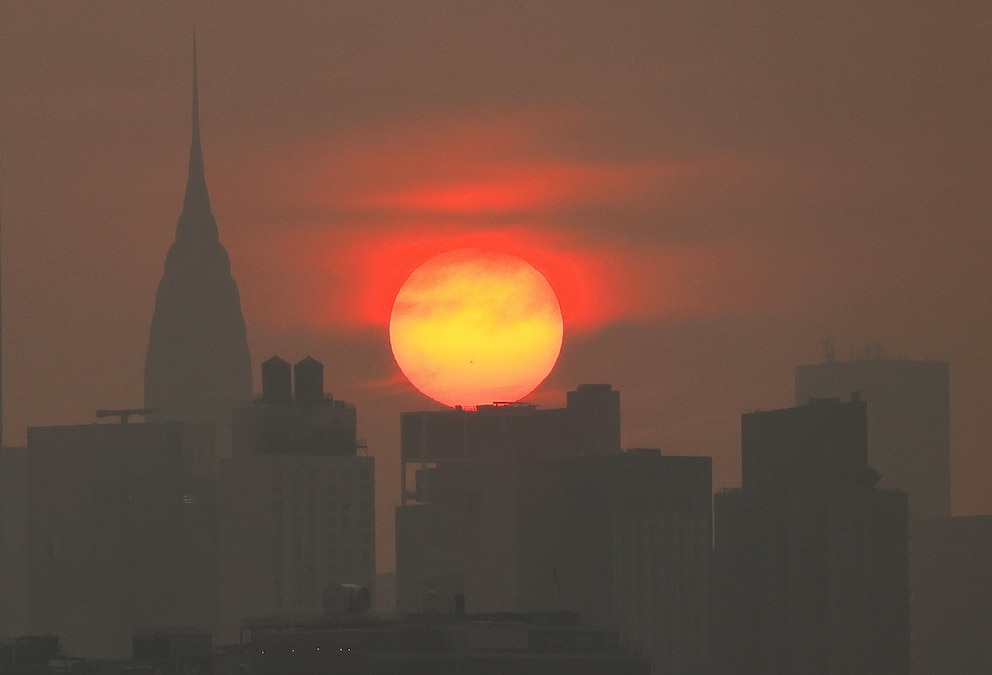
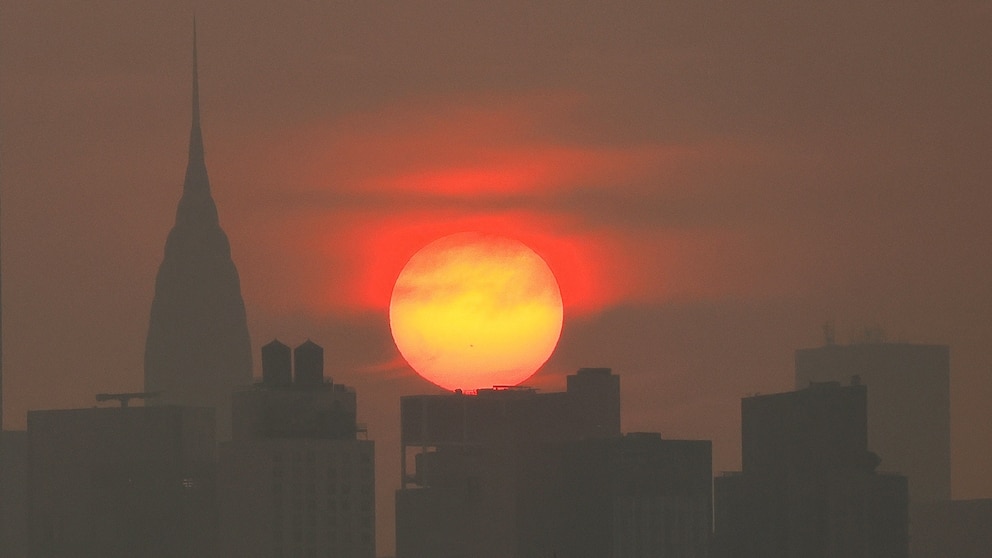
Wildfire smoke from Canada shrouds the sun as it rises behind the Chrysler Building in New York City, July 17, 2026.
Gary Hershorn/ABC News
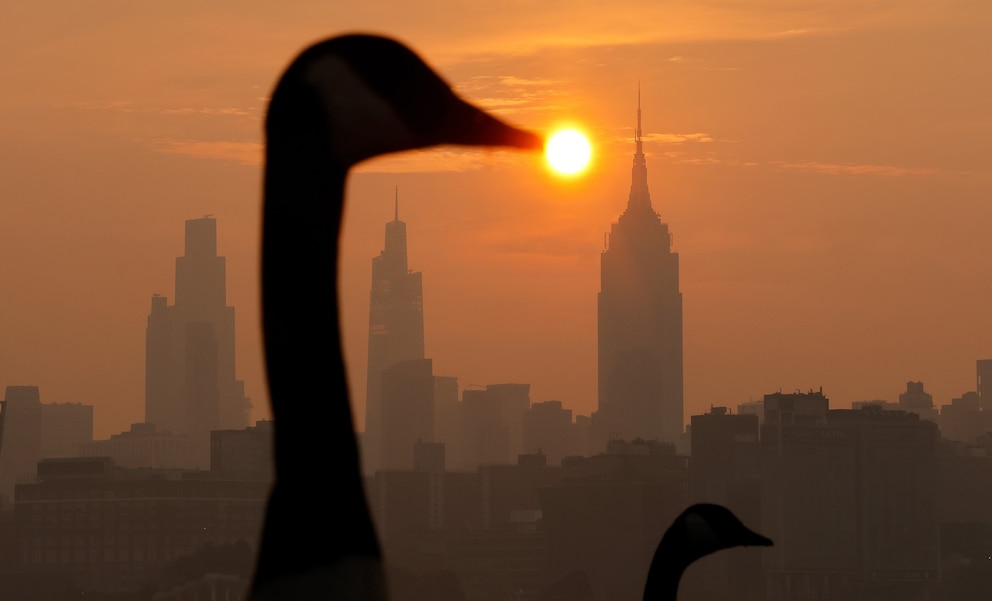
Wildfire smoke from Canada shrouds the sun as it rises behind the Empire State Building in New York City, and geese in a park in Hoboken, New Jersey, July 17, 2026.
Gary Hershorn/ABC News

Canada has nearly 900 wildfires burning, with over 100 categorized as out of control. Almost 200 of the fires are in Ontario.

Heavy rain by the Minnesota/Canada border on Friday may help with some fires, but the storms could also bring strong winds and lightning, which can spark new fires and create more erratic fire activity.

Related Articles

As smoke from Canadian wildfires blankets the US, can wearing a mask help?

Passing showers and thunderstorms are also possible in Ontario Friday, but that rain won't be enough to put the wildfires out, and the winds may make conditions worse and lightning could spark new wildfires. There are more chances for rain over Ontario on Saturday and again on Tuesday. 

In the U.S., the smoke Friday spans from Duluth, Minnesota, to Richmond, Virginia, impacting states including Wisconsin, Michigan, Ohio, New York, Pennsylvania, New Jersey, Maryland and Delaware.
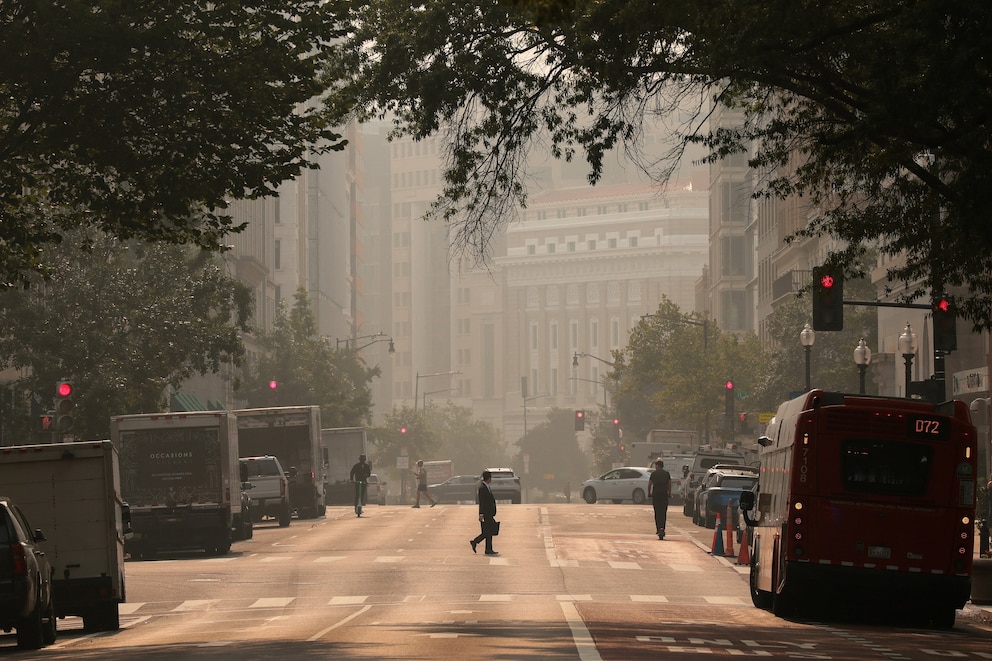
A person crosses the street as smoke from Canadian wildfires blankets Washington, July 17, 2026.
Kylie Cooper/Reuters

Philadelphia issued a "Code Purple Air Quality Emergency Day" Friday.

"Everyone may experience negative health effects from particulate matter in the air," Philadelphia officials warned. "Members of sensitive groups may experience more serious health effects."
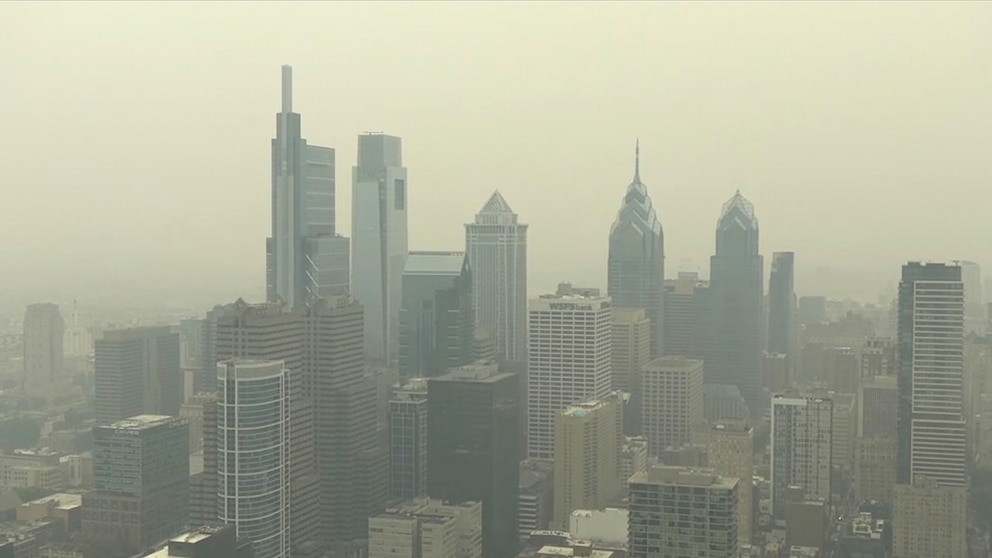
The skyline of Philadelphia is shrouded by smoke from wildfires in Canada, July 17, 2026.
WPVI

The worst air quality Friday afternoon is in northern Minnesota and Wisconsin.

In Milwaukee, where the air is in the hazardous category, the Milwaukee Brewers are allowing ticket holders to exchange tickets for Friday night's game for another regular season home game. 

The air is expected to improve on Saturday in the Ohio Valley, Northeast and the Mid-Atlantic, when rain moves in. But parts of the Midwest and Great Lakes will continue to see dangerous air quality.
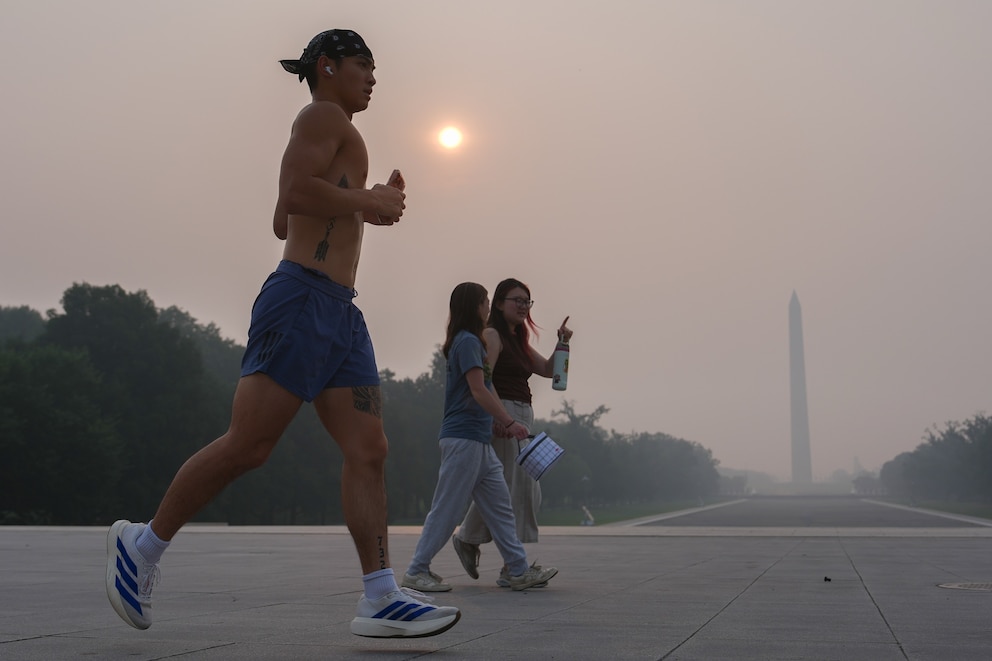
The sun is obscured by wildfire smoke as people run in front of the Washington Monument and Lincoln Memorial Reflecting Pool, July 17, 2026, on the National Mall in Washington.
Julia Demaree Nikhinson/AP Photo

Smoke is probable over New York City on Sunday when Spain plays Argentina in the FIFA World Cup Final at MetLife Stadium in New Jersey, though it is still too early to know exactly where the smoke will be. Sources familiar with the situation told ABC News that "all involved authorities are monitoring."
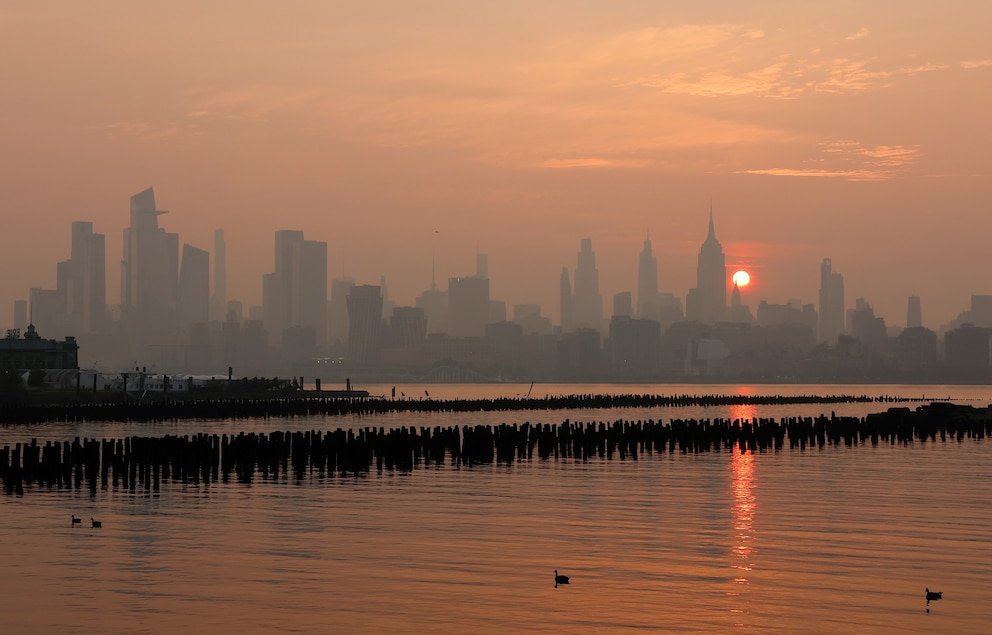
Wildfire smoke from Canada shrouds the sun as it rises behind the skyline of midtown Manhattan and, the Chrysler Building and the Empire State Building in New York City, July 17, 2026.
Gary Hershorn/ABC News
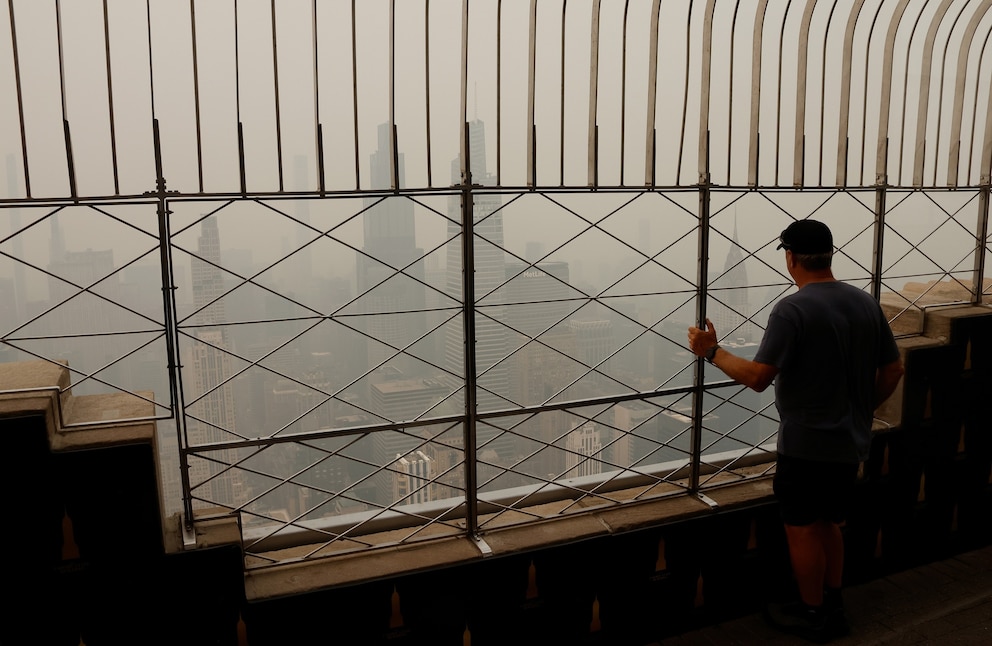
Smoke from wildfires in Canada shrouds midtown Manhattan and the Chrysler Building as a man looks out from the 86th-floor observation deck of the Empire State Building, July 16, 2026, in New York City.
Gary Hershorn/ABC News

Smoke contains fine particles that can travel deep into the lungs. For those who need to work outdoors, are more sensitive to smoke or are in a high-risk group, Kai Chen, an associate professor of epidemiology at Yale School of Public Health, told ABC News that the best type of mask to wear is an N95, which is designed to filter at least 95% of airborne particles.
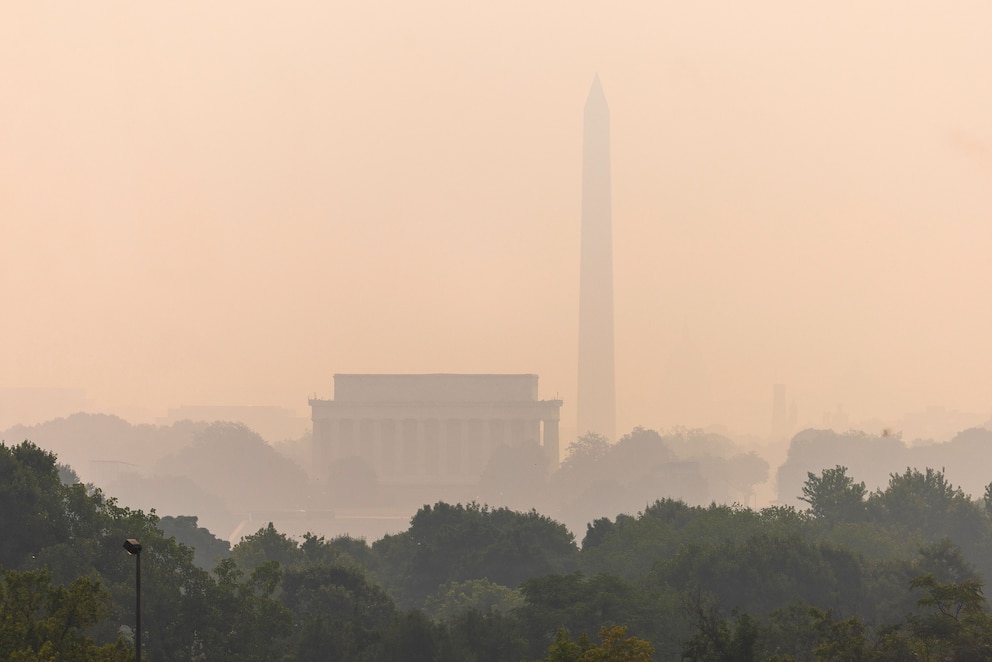
Haze from Canadian wildfires blankets the National Mall in Washington, July 17, 2026.
Jim Lo Scalzo/EPA/Shutterstock

Related Articles

Authorities 'monitoring' wildfires' impact on 2026 World Cup final, sources say

In New York City, Mayor Zohran Mamdani said free KN95 masks are available at hundreds of locations.

Click here to read more on how to stay safe.

ABC News' Michelle Simmons contributed to this report.

Up Next in News—

Authorities 'monitoring' wildfires' impact on 2026 World Cup final, sources say

July 17, 2026

Tips for buying the right AC unit amid a record heat wave sweeping the US

July 16, 2026

How to protect yourself from poor air quality as wildfires burn in Canada

July 15, 2026

All about daylight saving time after House passes bill to make it permanent

July 15, 2026

Shop GMA Favorites

ABC will receive a commission for purchases made through these links.

Sponsored Content by Taboola

The latest lifestyle and entertainment news and inspiration for how to live your best life - all from Good Morning America.
  • Contests
  • Terms of Use
  • Privacy Policy
  • Do Not Sell My Info
  • Children’s Online Privacy Policy
  • Advertise with us
  • Your US State Privacy Rights
  • Interest-Based Ads
  • About Nielsen Measurement
  • Press
  • Feedback
  • Shop FAQs
  • ABC News
  • ABC
  • All Videos
  • All Topics
  • Sitemap

© 2026 ABC News
  • Privacy Policy— 
  • Your US State Privacy Rights— 
  • Children's Online Privacy Policy— 
  • Interest-Based Ads— 
  • Terms of Use— 
  • Do Not Sell My Info— 
  • Contact Us— 

© 2026 ABC News