Brothers describe catching tiger shark off coast of Cape Cod
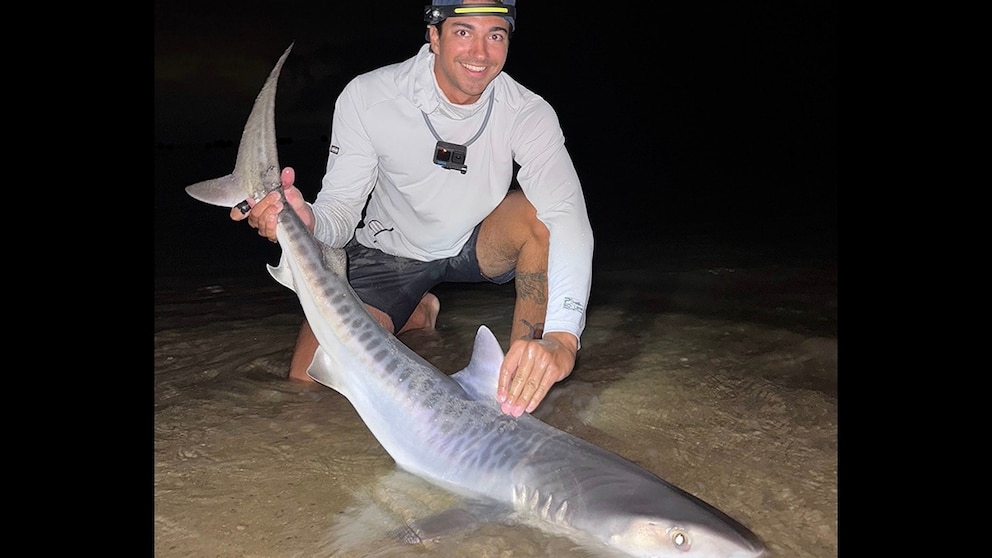
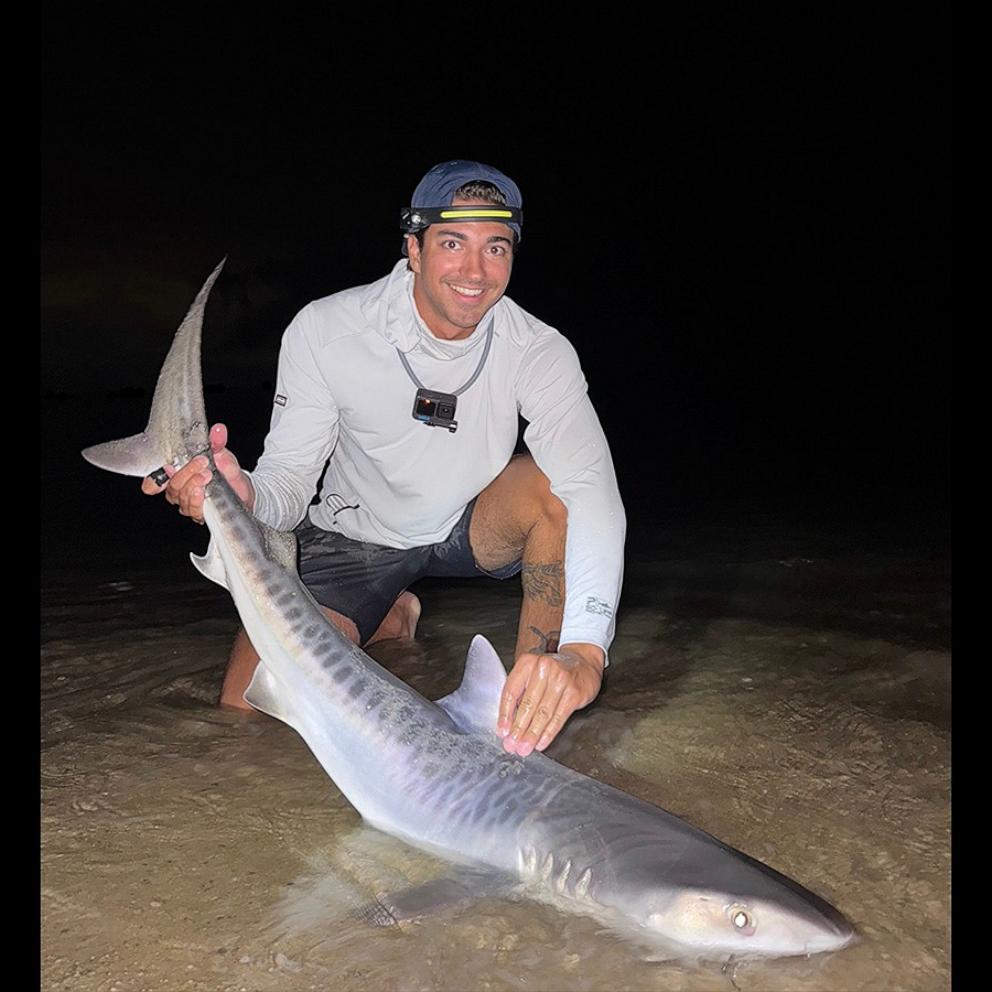
Two brothers say they were shocked to find a tiger shark on the end of their line while night fishing off the Massachusetts coast last month.
Brothers Nate and Nelson Rouette said they caught the juvenile tiger shark, more commonly seen in temperate and tropical waters, off the coast of Cape Cod in late July. The shark measured about 5 feet in length, they said.
Adult tiger sharks generally grow to around 10 to 14 feet in length, according to National Marine Sanctuary Foundation.
"Once in a while, you'll run into those southern water exotics," Nate Rouette said, speaking with ABC News. "It's really rare to get one on rod and reel, especially off the beach."
Nate Rouette said it was pitch black out when he caught the shark, so it wasn't until he pointed his head-lamp down that he noticed its stripes -- the hallmark of a tiger shark.
"I was just in awe," he said. "I couldn't hold my excitement, I just was yelling to my brother, like, 'It's a tiger, it's a tiger.'"
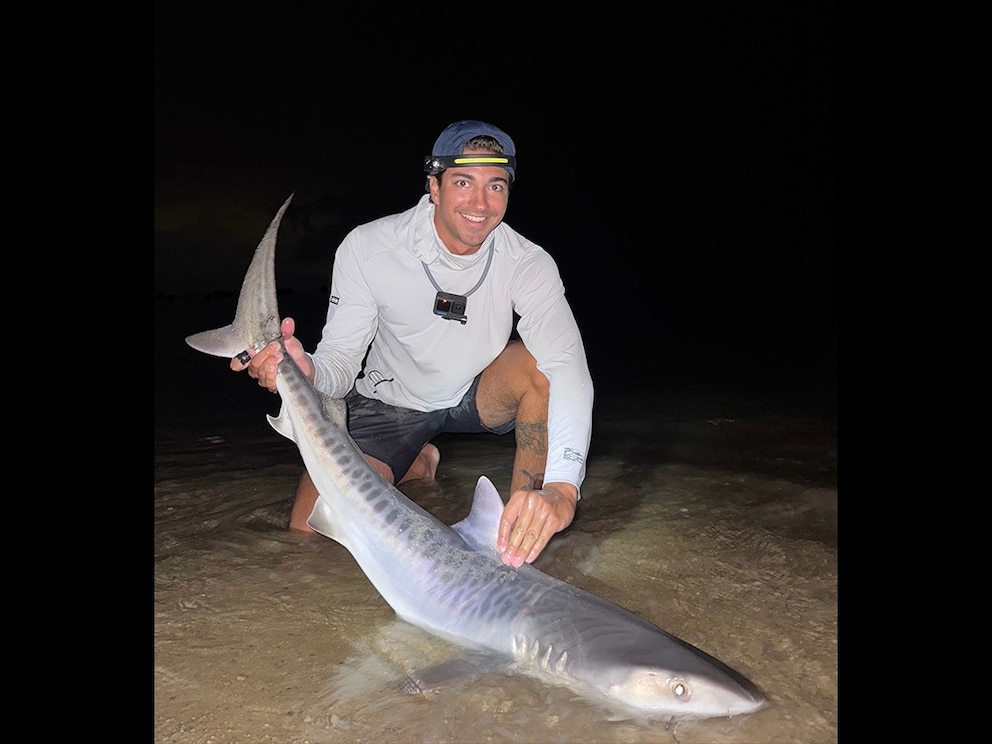
Nelson Rouette added, "A tiger shark was definitely not in the menu for me of what I was expecting."
Nate Rouette said he quickly de-hooked the shark, who swam off in good condition.
Experts say that while adult tiger sharks have been spotted in the area before, historically, sightings of younger juvenile tiger sharks have been more rare, but they are becoming more frequent in northern waters due to rising ocean temperatures.
"We've seen really warm-water temperatures that are up into the high 70s and can get up into the 80s during the summer, so that's really hospitable for them," said John Chisholm, adjunct scientist at the New England Aquarium.
Just this past Tuesday, juvenile white sharks were spotted near Pine Point Beach in Maine.
Earlier this year, off the coast of North Carolina, a 14-foot long great white nicknamed "Contender," who is believed to be the largest great white tagged in the Atlantic, was spotted heading to Cape Cod, Massachusetts.



Tiger sharks can be aggressive. The species joins great whites and bull sharks to make up the three shark species responsible for most human attacks.
Chisolm noted that shark attacks on humans are rare.
Still, he added, "When you go to the beach, if you're gonna go in the water, be aware that sharks are around."