College basketball coach speaks out after rip current rescue
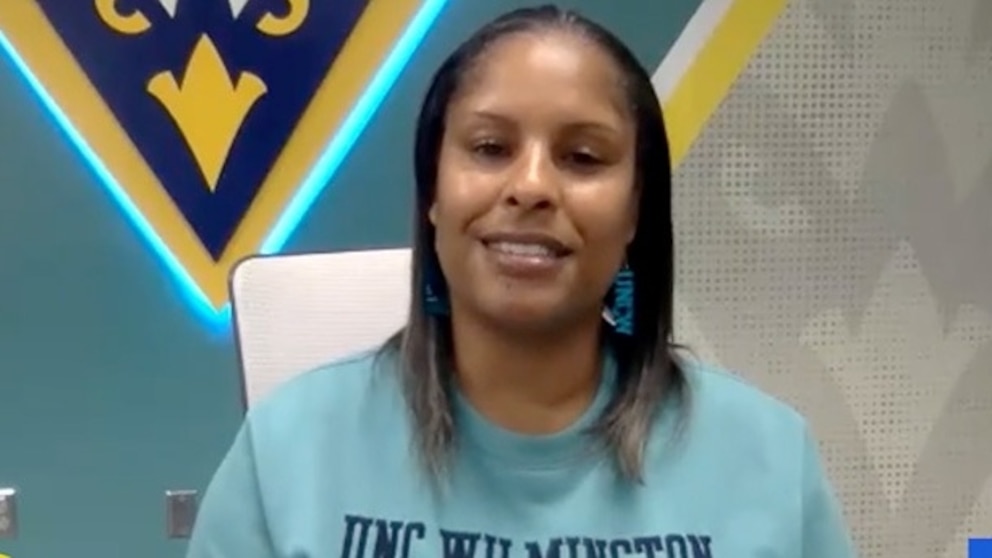
University of North Carolina Wilmington women's basketball coach Nicole Woods is speaking out after nearly drowning on a North Carolina beach last month.
Woods recounted the event, sharing her experience in a "Good Morning America" segment that aired Tuesday morning.
"I am a miracle, and I'm not gonna, you know, waste my life, I could tell you that," Woods said in the interview.
Woods, 41, said she was on a family trip to the beach when her niece and 8-year-old nephew Noah ran out to the shore to play in the water.
Woods said a powerful wave suddenly knocked Noah off balance and pulled him under.
"I had just gotten up to the shore not too long before I saw Noah get hit by a wave," she recounted, describing the circumstances as "a perfect storm."
Woods said she quickly sprang into action to help her nephew.
"It wasn't until I got out there [to assist him] that I realized, at this point, we were in a rip current," she recalled.
Woods said her nephew began panicking. "That's when I realized we were in trouble," she said. "I just remember thinking, 'Nothing can happen to my nephew. [We've] got to save Noah.'"
She said the last thing she remembers is being under the water and pushing her nephew toward rescuers who had rushed to save the pair.
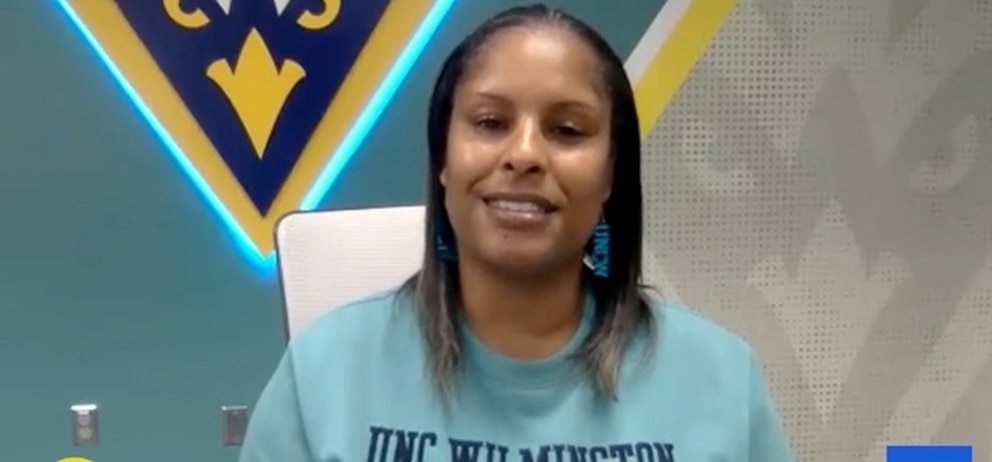
Woods said she was later told that when rescuers pulled the two out of the water, Noah was stable, but Woods was not breathing and had no pulse. She said she was told she underwent five minutes of chest compressions, then received a shock to the heart.
"They shot me with the AED, got a pulse, and were able to transport me there from the beach to the hospital," she said.
Woods said she was placed on a ventilator before she was able to breathe on her own again the following morning. She told ABC News she was deeply grateful to the first responders, crediting them with saving her life.
In a statement to ABC News, the town of Wrightsville Beach, North Carolina, confirmed the incident and thanked the rescuers and first responders who came to Woods and her family's aid that day.
"The Town of Wrightsville Beach is grateful for the swift and professional response by Wrightsville Beach Ocean Rescue, the Wrightsville Beach Police Department, and all assisting agencies during a recent rip current rescue involving a woman and her nephew," the statement read. "After 911 was called, emergency responders arrived quickly and worked together to bring both victims safely to shore."
"This incident serves as an important reminder that the ocean is powerful, unpredictable, and can become dangerous very quickly. It can impact even the strongest swimmers," the statement continued. "We are thankful that both individuals are safe and recovering. The Town of Wrightsville Beach encourages everyone to swim near lifeguards if they are in the stands and use caution before entering the water."
Experts shared with "GMA" how to survive dangerous rip currents like the one Woods and her nephew encountered.
"I like to tell people, 'Where there's a dip, there's a rip,'" said Wyatt Werneth, national spokesperson for the American Lifeguard Association and founder of Drown Zero International.
"If you've ever been on the beach, and the tide comes in and wets all your stuff, and the people on each side of you are dry, you're in the rip," Werneth added. "Stay out of it."
According to Werneth, key indicators you're in a rip tide can include white foam on the surface of the water or a flat area where the waves are not breaking.
If you do get caught in a rip current, the goal is to remain calm, wait until the current begins taking you out, then flip and float with your legs up and back of your head against the water, using only gentle movements to conserve energy.
Once you're able to determine which direction the current is flowing, you can begin to swim perpendicular to the current and try to make your way back to shore at an angle. If you're unable to swim back to shore, remain calm and try to float until help arrives.